AlphaFold Server Tutorial + Boltz-2
Exercise 1: Modeling of Calmodulin With and Without Ca²⁺ Ions
Upon Ca²⁺ binding, calmodulin undergoes conformational rearrangements. In this exercise, we want to model calmodulin in the apo conformation (without Ca²⁺ ions) and the Ca²⁺-bound conformation.
Target: Calmodulin from H. sapiens (UniProt ID: P0DP23)
Input sequence: Copy the sequence from UniProt: P0DP23
-
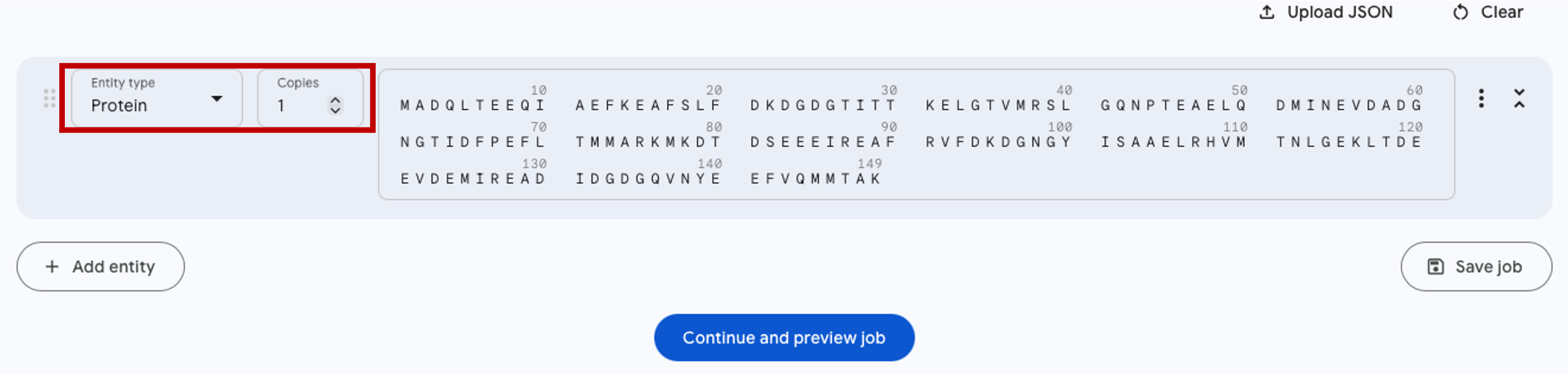
First, model calmodulin in the apo conformation. Go to AlphaFold Server, select Protein as the Entity type, keep Copies as 1 (monomer) and insert the calmodulin sequence into the sequence field. Press Continue and preview the job.
-
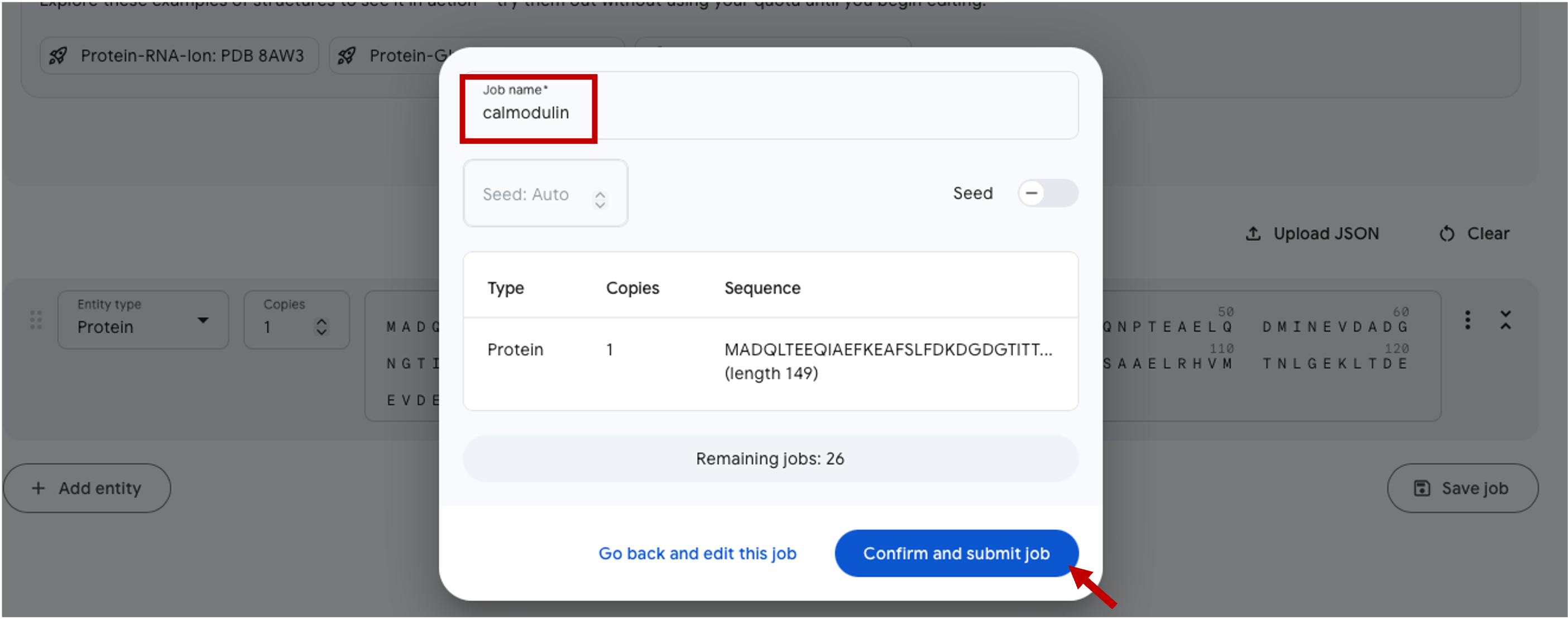
In the window, rename the Job name as "calmodulin" and press Confirm and submit job.
-
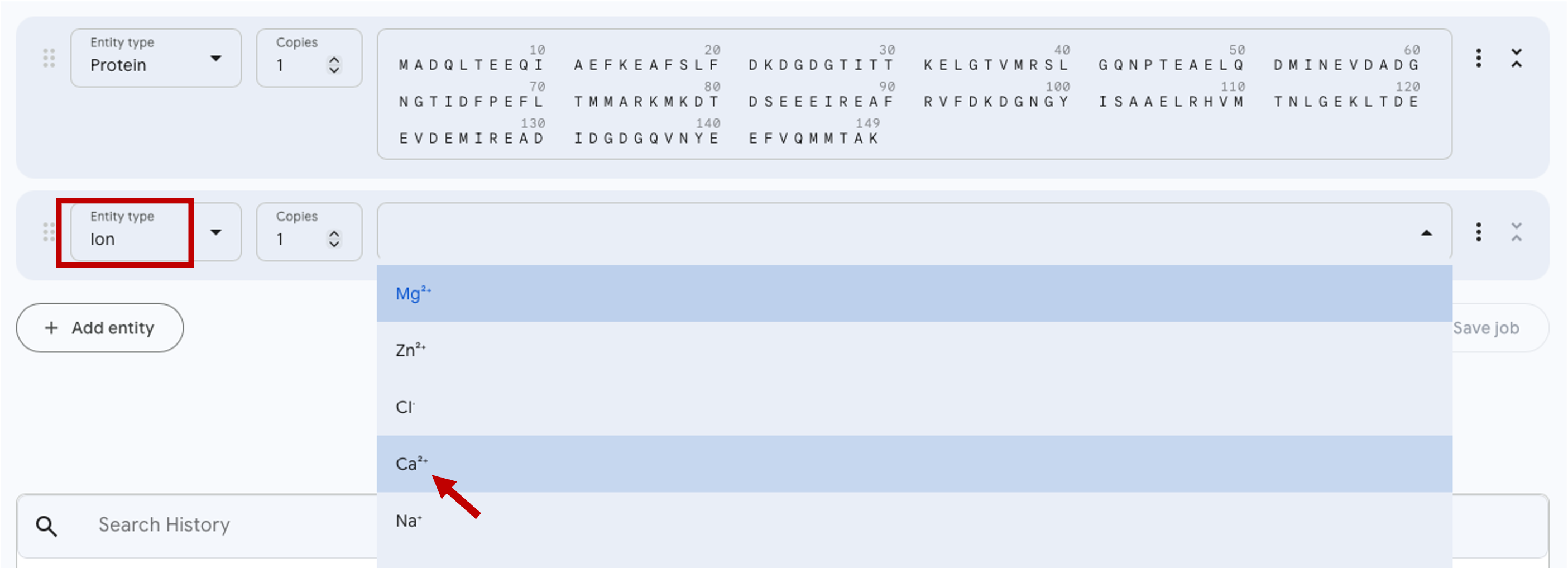
Model calmodulin in complex with 4 Ca²⁺ ions. Press + Add entity → Entity type "Ion" → Copies set to 4 and in the window select Ca²⁺.
-
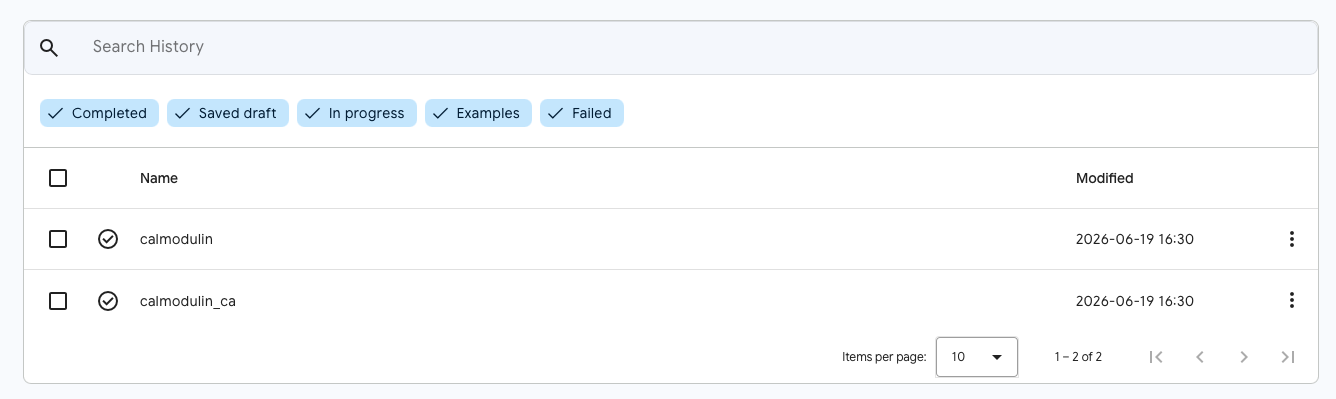
Click on the jobs and evaluate the results.
-
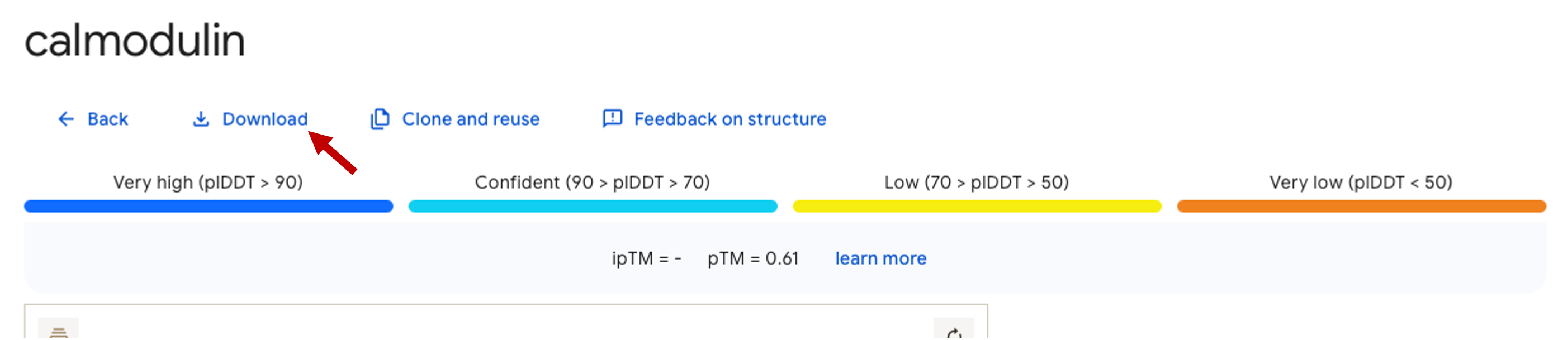
Download the models.
-
Now compare the apo and Ca²⁺-bound conformations in Mol*. Upload the best model for each run and superpose them with TM-align. Do you see any differences?
-
Now confirm to which state (apo or Ca²⁺-bound) the resulting models correspond. Upload the apo (PDB ID:
1CFD) and Ca²⁺-bound (PDB ID:1CLL) crystal structures of calmodulin from the PDB, and answer this question using TM-align.
Spoiler alert!
This exercise shows that AF3, as AF2, still cannot model protein conformations.
Exercise 2: Protein-ligand complex with Boltz-2
In this exercise, we will try modeling a protein-ligand complex using a model similar to AlphaFold3. In AlphaFold3, small molecule ligands can be specified either using:
- SMILES string
- CCD code of a ligand
Unfortunately, AlphaFold Server (the online implementation of AlphaFold3) does not support arbitrary SMILES input and only allows a very limited set of CCD ligands. To try out specifying a ligand with a SMILES string, we can use one of the online implementations of AlphaFold3-like models, such as Boltz, Chai-1, and others.
We will use Boltz-2 via Neurosnap. Using it requires a free account (you get ~2 free predictions).
Target: Since we are having this course in Basel, we can model the binding of LSD to the 5-HT2A receptor (a serotonin receptor). LSD was first synthesized by Albert Hofmann in Basel, where he also famously discovered its effects.
Experimental structure: PDB 7WC6
Protein sequence: The FASTA file can be found in the Data section (Exercise 2).
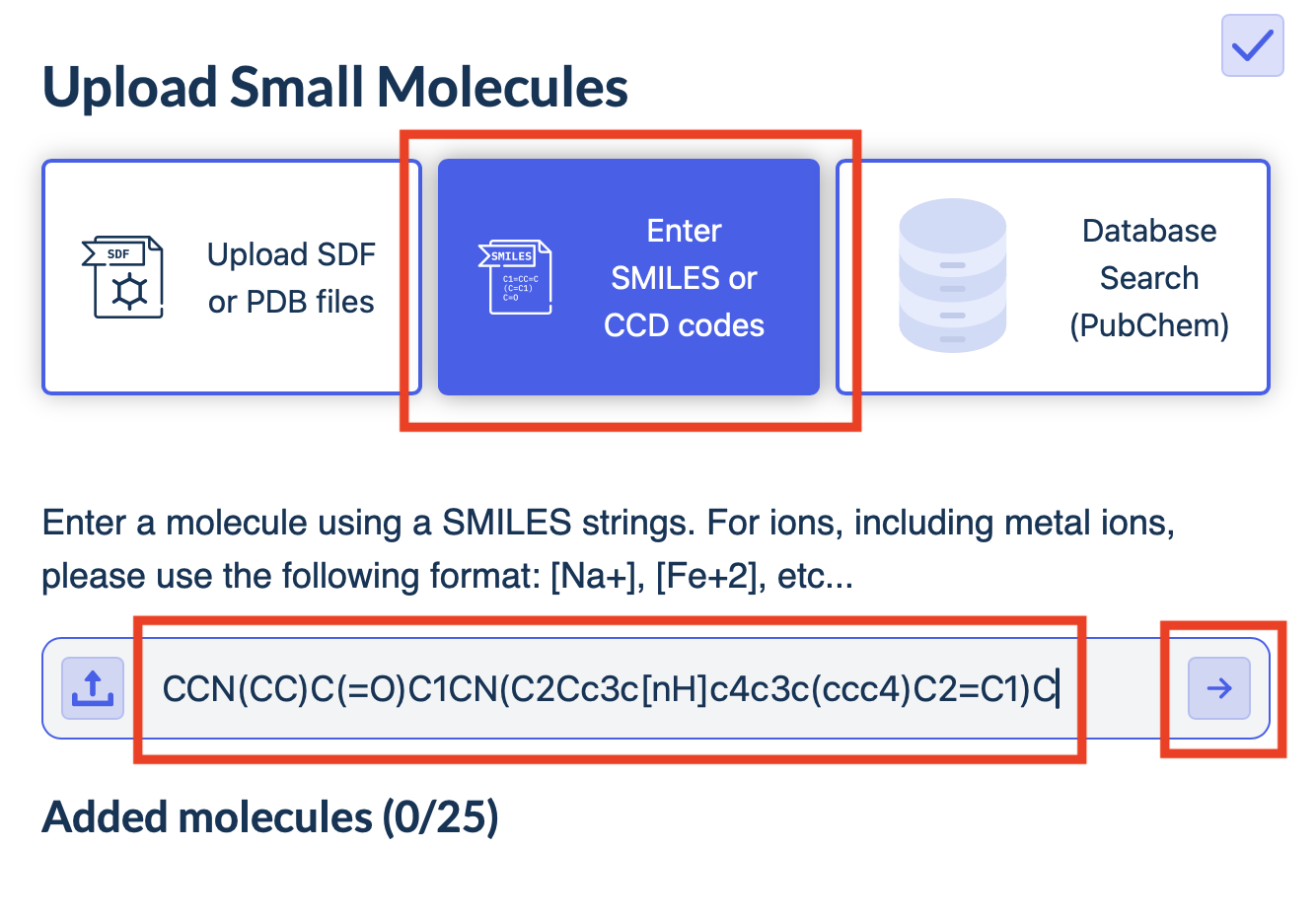
Ligand SMILES string: CCN(CC)C(=O)C1CN(C2Cc3c[nH]c4c3c(ccc4)C2=C1)C
-
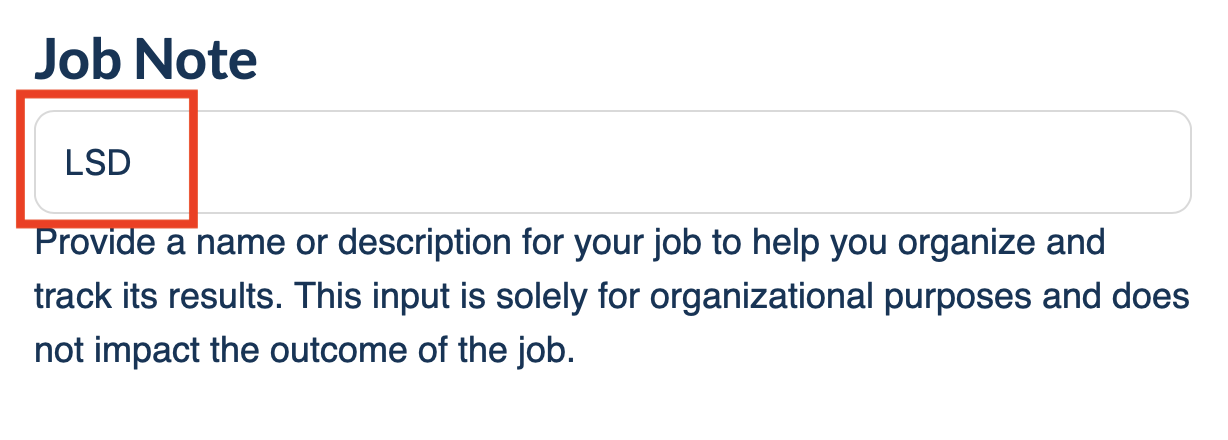
Open Neurosnap and make an account. You will get a confirmation email (also check your spam folder). Once activated, find Boltz-2 on the service (or open it directly). Give the job a name in the Job Note section.
-
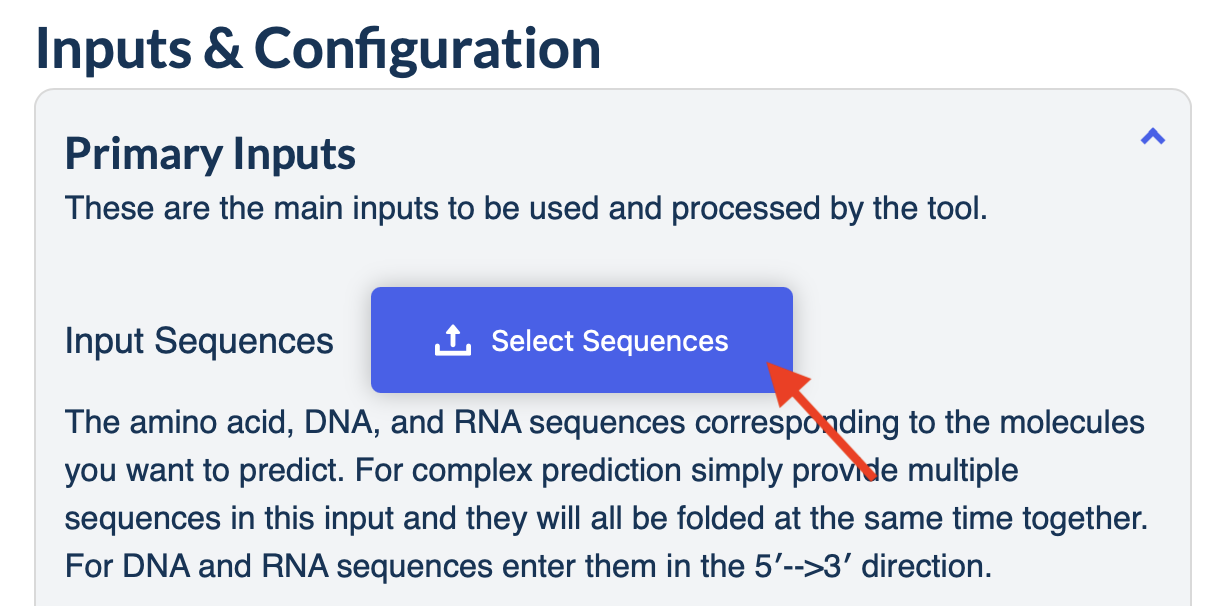
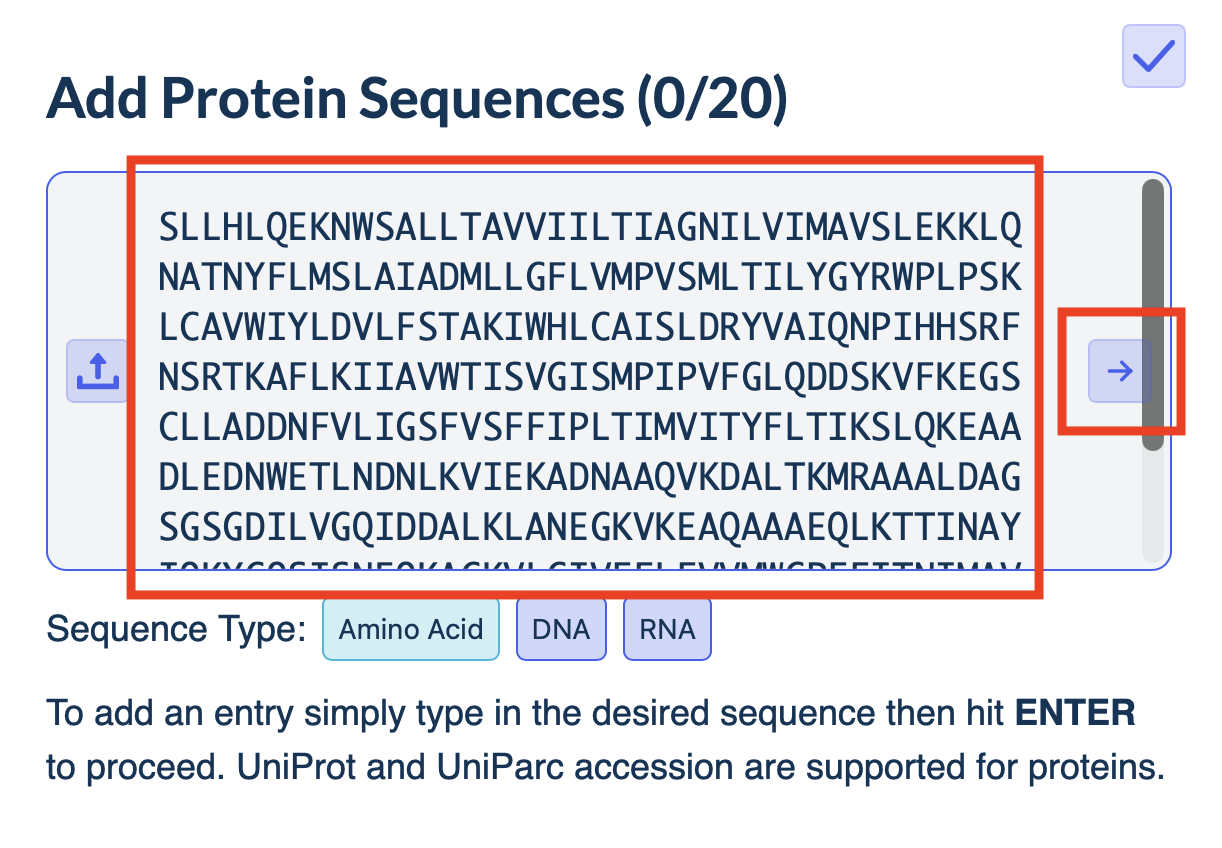
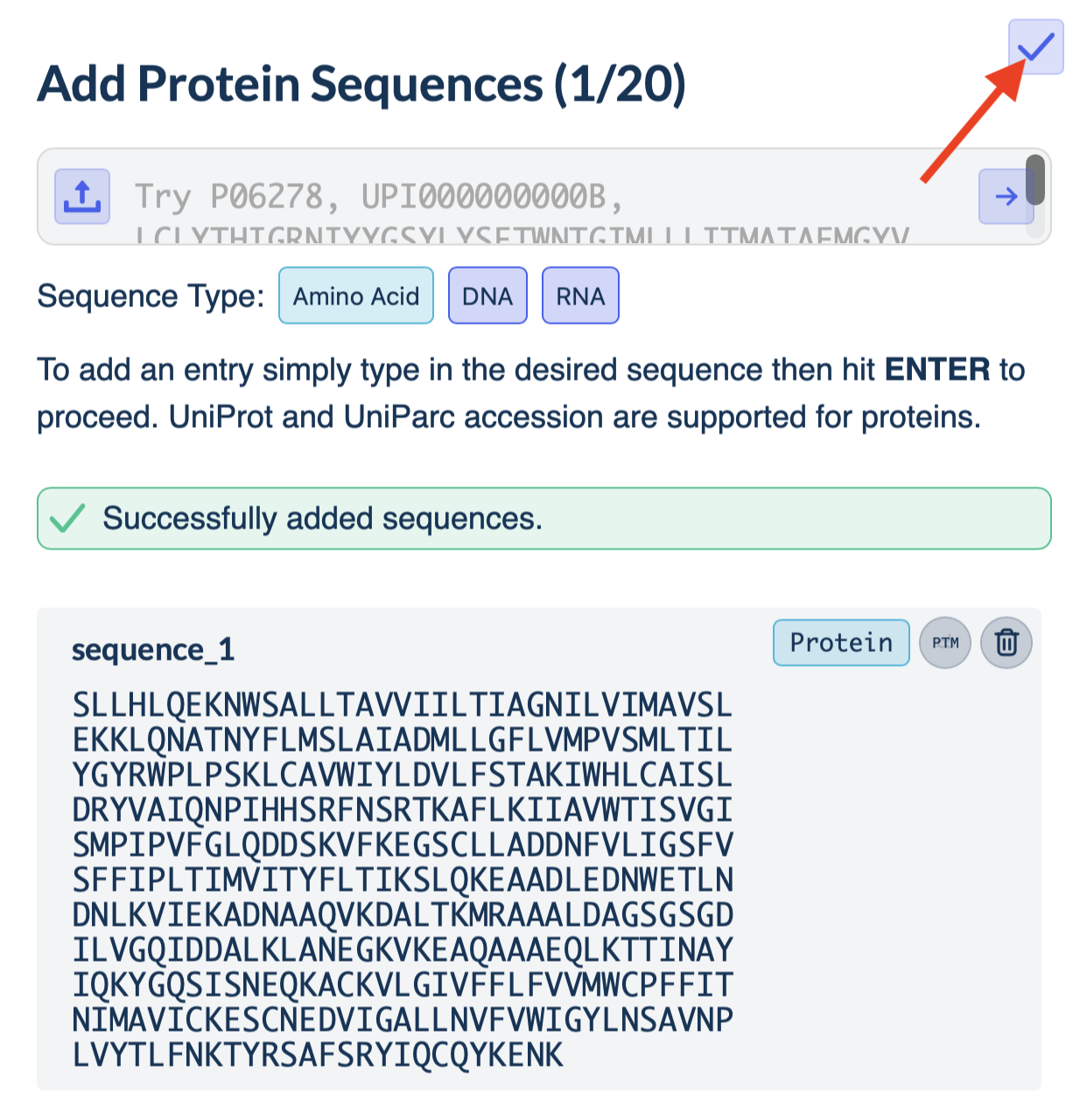
Get the protein sequence from the FASTA file, open the Input Sequences section and paste the protein sequence. Make sure the sequence is added before closing the window.
-
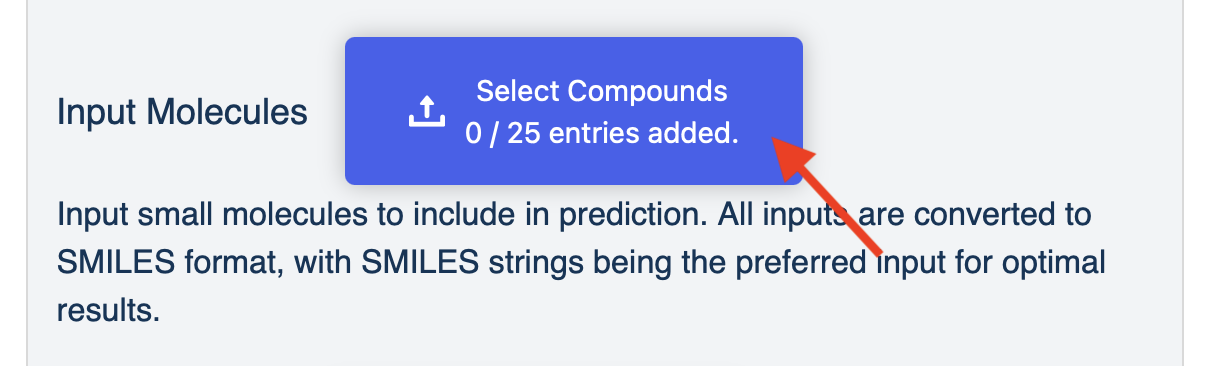
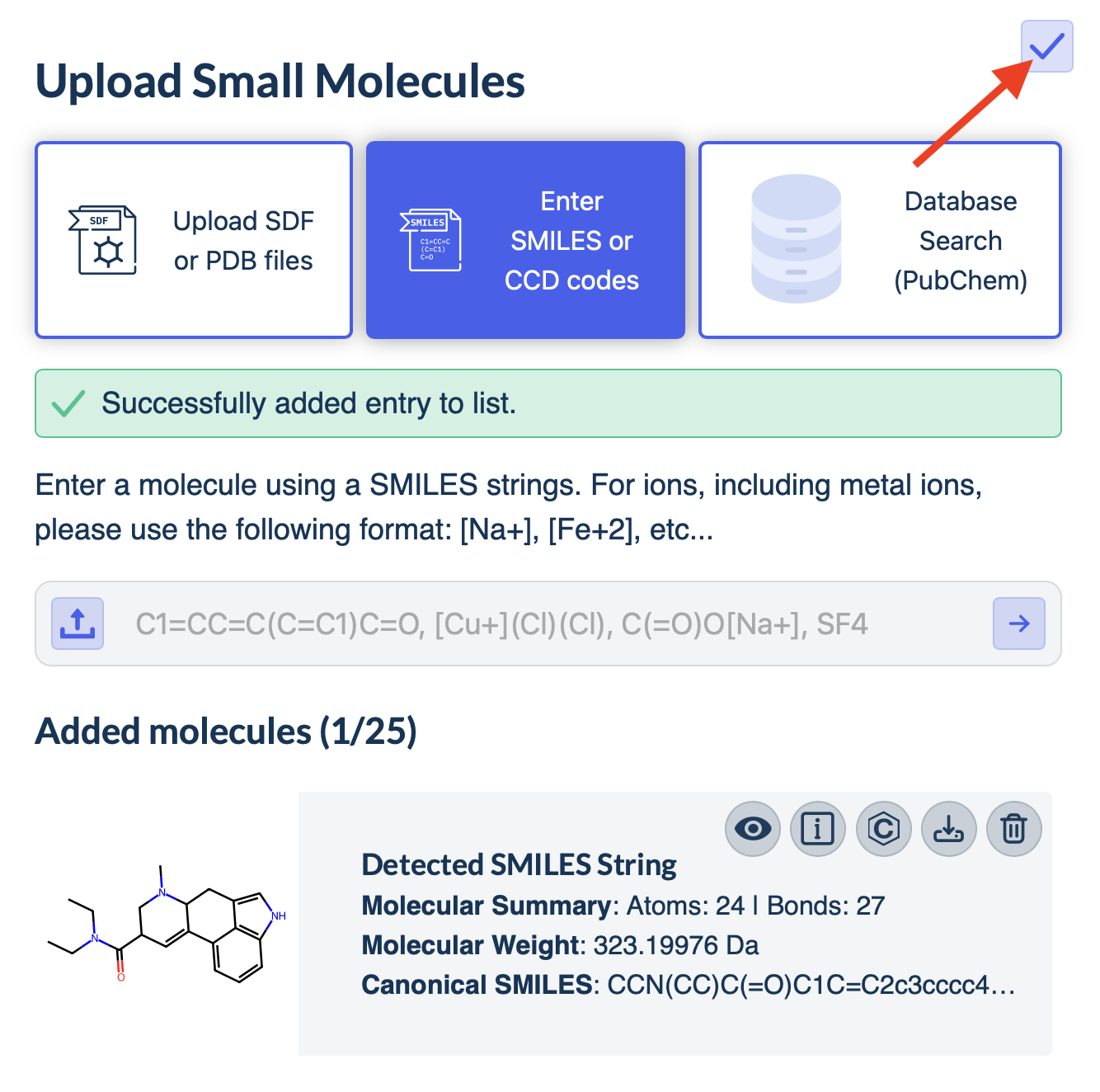
Copy the SMILES string of the ligand. Open the Input Molecules section, click on Enter SMILES or CCD codes and paste the SMILES string. Make sure the molecule is added before closing the window.
-
Click Run Job at the bottom of the page.
Exercise 3: Predict your favorite protein
In this exercise, you can model a protein or protein complex of your own choice that you find biologically interesting.
Guidance
In case you don't have a target in mind, team up with someone who does!
-
If you know the complex you want to model (including PTMs, ligands, DNA/RNA, etc.), submit the job on the AlphaFold Server and analyze the resulting metrics. You can also use:
- LIVIA for additional scores (ipSAE, cLIS, etc.) and analysis of all models
- PAE Viewer for an interactive PAE matrix
-
If you do not know the interacting partners (proteins, ligands, DNA/RNA, peptides), you can:
- Use SWISS-MODEL Repository for a sequence search for templates in PDB
- Or/And generate a prediction for one or more chains and use it as a template (if prediction is confident) for a structural search using Foldseek
- After gaining some information, proceed to the AlphaFold Server submission above